SemiCon 2.0: India Eyes ₹1 Lakh Crore Investment and 1 Lakh Jobs in Semiconductor Ecosystem
Union Minister Ashwini Vaishnaw shared the vision for SemiCon 2.0, aiming to strengthen India's position in the global semiconductor value chain through design, manufacturing, and talent development.
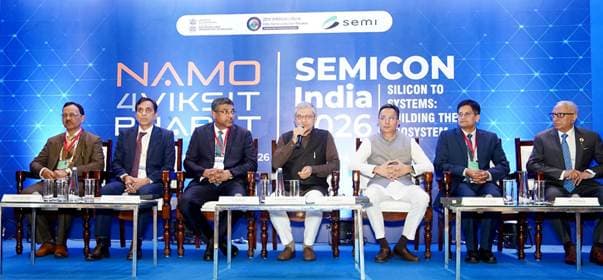
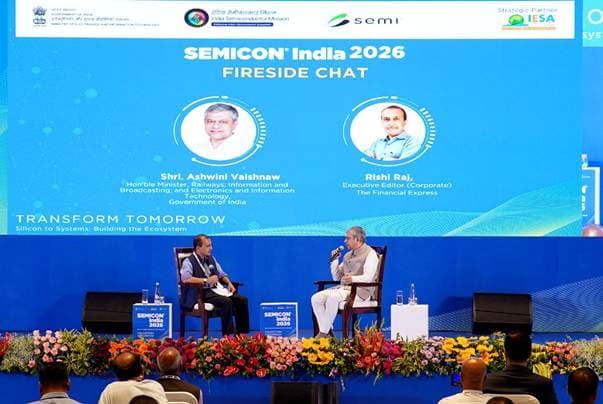
Union Minister for Electronics and Information Technology, Shri Ashwini Vaishnaw, detailed the implementation approach and investment momentum of SemiCon 2.0 during 'SemiCon India 2026'. He explained that while SemiCon 1.0 was aimed at laying the foundation of India's semiconductor industry, SemiCon 2.0 aims to establish the complete ecosystem and expand capabilities across the value chain.
According to Shri Vaishnaw, investment commitments of approximately ₹1 lakh crore (about 11-12 billion USD) have been secured under SemiCon 2.0. It is expected that these investments will materialize over the next two to three years, boosting economic activities and creating nearly 1 lakh new employment opportunities.
To strengthen semiconductor capabilities, the government has identified six key pillars:
Design Ecosystem: The goal is to provide support to 200 semiconductor design startups. Out of the first phase of 105 startups, 20 have already secured venture capital funding.
Machines and Materials: This involves strengthening the domestic ecosystem for semiconductor manufacturing equipment and materials to attract global companies to establish design and manufacturing operations in India.
Fabs: Expanding manufacturing capabilities across various technologies, including display, memory, silicon, compound, and logic fabs.
Advanced Packaging: Developing advanced packaging capabilities to enhance system-level performance and efficiency.
Research and Development (R&D): Promoting applied R&D for the development of practical technologies through the participation of industry, government, and academic institutions.
Talent Development: The government has set a target to train 1 lakh technicians over five years. This will be achieved through partnerships with international institutions such as Taiwan's ITRI and industry leaders. Currently, approximately 400 universities are involved in chip-design education.
During SemiCon India 2026, 11 Memorandums of Understanding (MoUs) were signed and five major announcements were made. Key agreements include collaborations between Tata Electronics and global giants such as Nexperia B.V., Fujifilm Corporation, and BESI Singapore. Additionally, the development of a 363-acre vendor park in Dholera, Gujarat, and the announcement of six 'Chip-In' (ChipIN) regional centers were highlighted.
The event, held at Yashobhoomi in New Delhi until September 19, is expected to see participation from representatives of 52 countries and over 600 companies.