India's Semiconductor Mission Shifts Focus to Large-Scale Industry Growth via ISM 2.0
Union Minister Ashwini Vaishnaw announced that commercial production has begun at five semiconductor plants in India, with a goal to develop 200 chip design companies.
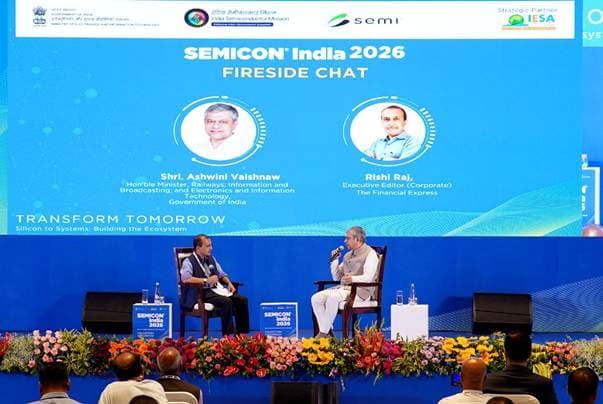
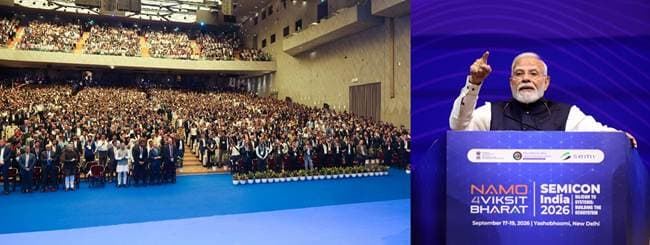
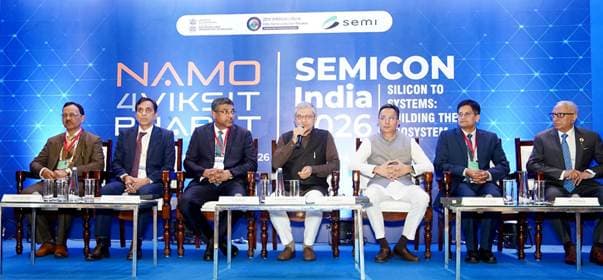
Union Minister for Electronics and Information Technology, Shri Ashwini Vaishnaw, announced at 'Semicon India 2026' that India's semiconductor mission is now moving beyond basic infrastructure development toward establishing a large-scale industry. He stated that the India Semiconductor Mission (ISM) 1.0 achieved its six-year goals in just four years. The focus will now shift toward developing a complete semiconductor ecosystem through ISM 2.0.
According to Minister Vaishnaw, ISM 2.0 will be based on six main pillars: design, materials and machinery, more fabs, more ATMP (Assembly, Testing, Marking, and Packaging) units, Research and Development (R&D), and talent development. He shared that commercial production has already commenced at five semiconductor manufacturing plants in India, demonstrating the country's competitiveness in the global market regarding cost and quality. Additionally, a significant portion of the capacity for a fab scheduled to start in 2028 has already been booked.
Highlighting design capability as one of India's greatest strengths, the Union Minister mentioned that at least 200 chip design companies are expected to emerge under ISM 2.0. He noted that in the first phase, more than 105 chip-design startups were provided with state-of-the-art Electronic Design Automation (EDA) tools, and 20 startups received venture capital funding.
India has made remarkable progress in skill development. Against an initial target of 85,000 design engineers, approximately 70,000 engineers have been trained within four years. Furthermore, industry-grade EDA tools are being made available to students in nearly 400 engineering colleges. Under ISM 2.0, the focus will expand from chip design to system design. Given the increasing industry demand, the government may consider increasing the target for training technicians to one lakh.
Shri Vaishnaw also emphasized that electronics, semiconductors, and Artificial Intelligence (AI) applications are interconnected, which is driving an increase in the manufacturing of AI servers. He stated that India is now moving toward 'Made-in-India' and 'Design-in-India' chips. Currently, some chips are being used in strategic sectors, and ATMP units are exporting to countries such as Japan, Switzerland, and Germany.